Introduction
Many drivers want to give their vehicle a more modern and sportier look with larger wheels). Demand for larger diameters has been rising for years, because vehicles with larger wheels often look more commanding and emphasise the design of the bodywork more strongly. At the same time, almost every driver asks how many inches are allowed at all and what technical or legal limits exist. The decision is thus less simple than it first seems.
If you choose a wheel that is too large, you risk technical and legal problems. A diameter that is too large can mean the wheel and tyre combination no longer has clearance or that the rolling circumference lies outside the permitted values. Speedometer accuracy, ABS and ESP can also be affected if the combination is not correctly matched. In addition, registration may become necessary or an inspection centre may not accept the combination. Mistakes in the selection can therefore cost time, money and nerves.
In this article you will learn, clearly and understandably, how many inches bigger you can really go with wheels, which technical limits exist and how to tell immediately from the approvals of manufacturers such as TEC Speedwheels which sizes are permitted. We look at the importance of rolling circumference, offset, wheel load and approvals, and show how to find the right size safely. By the end you will know exactly which steps are necessary to drive larger wheels legally and sensibly.
Which factors decide how many inches are possible
The question of how large a wheel may be does not depend on a blanket number but on several technical parameters. The most important is the rolling circumference, which results from the combination of wheel diameter and tyre height. Only if this stays within certain limits can the wheel be used without an additional inspection. At the same time, the offset must fit so that the wheel has sufficient clearance in the wheel arch. Wheel load and approvals also play an essential role.
The following overview shows the central factors:
| Factor | Meaning | Influence on maximum wheel size |
|---|---|---|
| Rolling circumference | determines speedometer and ABS behaviour | may only deviate within limits |
| Offset (ET) | position in the wheel arch | affects clearance |
| Wheel load | load capacity of the wheel | must correspond to axle load |
This overview makes clear that there can be no general limit such as "two inches bigger at most". What matters is how well the technical values fit the whole vehicle configuration. With TEC Speedwheels, all relevant sizes and suitable tyre variants are documented, so drivers can see directly which combination is permitted.
Only when all technical values fit together can the wheel be used safely and legally. The inch value alone is not enough to determine a permitted combination.
How rolling circumference limits the possible wheel size
The rolling circumference describes the distance a wheel covers in one complete revolution. This value influences, among other things, speedometer accuracy and various driver assistance systems. If the rolling circumference deviates too much from the standard value, this can cause technical problems and make an inspection necessary. On many vehicles the rolling circumference must be close to the original value so that the combination can be used without registration.
The overview shows typical deviations and their meaning:
| Deviation | Meaning | Technical effect |
|---|---|---|
| small | often unproblematic | speedometer stays within limits |
| medium | individual inspection needed | possible registration |
| large | not permitted | combination is not accepted |
This table shows that tyre choice and wheel size must always be considered together. A larger wheel generally requires a tyre with a lower profile so that the rolling circumference does not increase. You will find the suitable tyre variants in the wheel's technical data. TEC Speedwheels states exactly which tyre sizes are compatible with which wheels.
The rolling circumference is therefore one of the most important values for judging how large a wheel may be. Only when this value is right can the size be chosen sensibly.
Which wheel sizes are typically possible without registration
Whether a larger wheel may be driven without registration depends on the approvals. An ECE wheel may be fitted without inspection if it corresponds to the original dimensions. An ABE (general type approval) can specify for certain vehicles that several larger wheel diameters are permitted without registration. A parts certificate (Teilegutachten), on the other hand, always means that an inspection centre must assess the combination.
Below you will find an overview of typical scenarios:
Below you can see different types of approval compared:
| Approval | Effect on possible size | Registration required? |
|---|---|---|
| ECE | corresponds to OEM dimensions | no |
| ABE | depending on conditions | only if conditions are met |
| Parts certificate | basis for assessment | yes |
This overview shows that a larger wheel is easiest to use when corresponding approvals are available. Many wheels from TEC Speedwheels have either an ABE or a parts certificate, so you can quickly see which size is possible without registration and which is not.
The approval is therefore decisive for determining how large a wheel can actually be. Without documentation, the wheel cannot simply be fitted.
What effects larger wheels have on driving feel and steering
Many drivers want larger wheels not only for looks but also because they create a more direct driving feel. The lower tyre profile means steering movements are transmitted more precisely. At the same time the suspension becomes firmer, because less rubber provides damping. Visually, the vehicle looks more commanding and sportier because less tyre sidewall is visible.
The overview shows typical effects of larger wheels:
| larger diameter | Benefit | possible change |
|---|---|---|
| sporty look | clean lines | firmer driving feel |
| more direct feedback | precise steering | lower comfort |
| more presence | stronger design | higher risk of wheel damage from potholes |
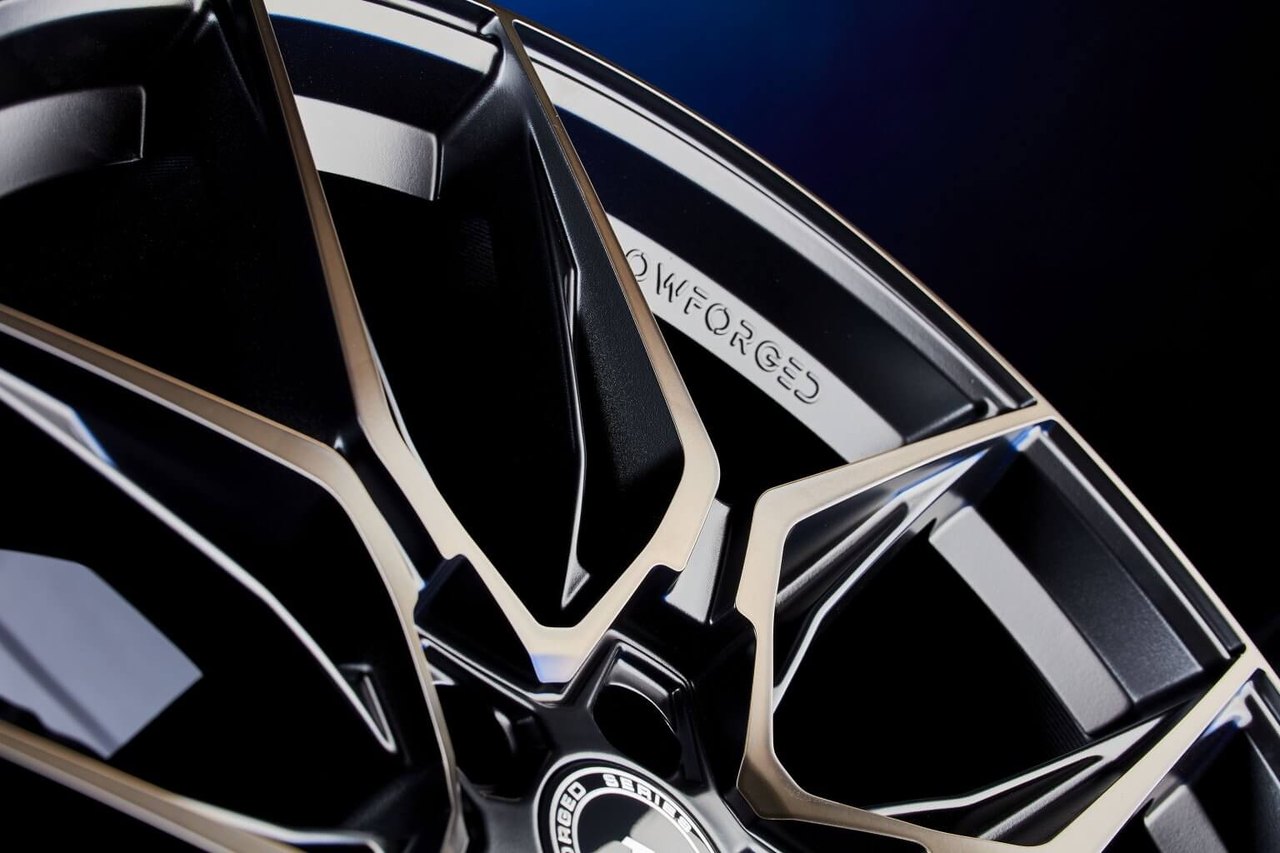
This overview shows that larger wheels bring both visual and dynamic changes. If you drive more sportily, you appreciate the more direct feedback. If you drive a lot on poor roads, you will feel the lower comfort more. With the Flowforged models from TEC Speedwheels, however, these effects can be cushioned, because the lower wheel weight relieves the suspension.
The decision for larger wheels should therefore always weigh up comfort, looks and driving characteristics.
How to determine the largest sensible size from the technical data
The wheel's technical data gives clear information about which sizes are possible. This includes wheel load, offset and the compatible tyre dimensions. These values must match the vehicle for the wheel to be used safely. The offset in particular decides whether the wheel keeps its clearance or causes technical problems.
Below you will find typical values that are often relevant:
| Technical value | Meaning | Influence on size |
|---|---|---|
| Offset | position in the wheel arch | determines clearance |
| Wheel load | maximum load capacity | must correspond to axle load |
| Tyre sizes | rolling circumference | decides eligibility |
This table shows that several values must be considered at the same time. In the TEC Speedwheels product documents, all this information is clearly presented for every wheel. This lets you quickly see whether the size you want is technically possible or whether restrictions apply.
The technical documentation is therefore the most important factor in deciding how many inches are sensible and permitted for your own vehicle.
Conclusion – how many inches bigger can I go?
How large a wheel may be depends on technical values, approvals and the rolling circumference. There is no blanket limit, only individually permitted combinations. As long as the rolling circumference is right and the approvals are available, several inches above standard are possible. The technical data from TEC Speedwheels makes it easy to check this information and make safe decisions. Larger wheels can enhance the vehicle visually and dynamically, provided they are correctly chosen and approved.
Frequently asked questions about "How many inches bigger can I go with wheels?"
Many drivers are unsure how much larger a wheel may actually be, because the technical requirements are not understandable at first glance. At the same time, different forms of documentation and tyre combinations are needed to judge whether a larger wheel is permitted. This raises many questions about registration, clearance and rolling circumference that are hard to judge without experience. The following answers therefore provide clear and understandable guidance.
Can I always go two inches bigger?
Whether two inches bigger is possible depends on the vehicle, technical clearance and the suitable tyre dimension. Some vehicles can easily take two inches more, while others allow only one or one and a half. What matters is that the rolling circumference is right and the approval allows the combination. If these conditions are met, an inspection centre can confirm usability or an ABE can allow use.
Does every larger wheel have to be registered?
A larger wheel must be registered if no suitable ABE or ECE allows its use. Many wheels are approved for several vehicle classes, so certain sizes are possible without registration. If such an approval is missing, a technical body checks the combination of tyre, wheel and vehicle. Only when this check is successful may the wheel be used.
What role does tyre height play with larger wheels?
Tyre height largely determines the rolling circumference. With larger wheels, a tyre with a lower profile is needed to keep the rolling circumference stable. If this value deviates too much, speedometer readings or driver assistance systems can be affected. Wheel and tyre data must therefore always be considered together to determine the permitted combination.
Why are some vehicles better suited to larger wheels?
Vehicles with larger wheel arches, longer axles or a sporty set-up can often take larger wheels more easily. Compact vehicles react more sensitively to changes in rolling circumference or offset. The vehicle's construction therefore largely determines how flexible the choice of size is. The wheel manufacturer's technical documents help you recognise these limits.
Can the combination still fail to be registered despite an expert report?
Yes. An inspection centre always assesses the specific vehicle and the chosen wheel and tyre combination. If clearance is not guaranteed or technical factors speak against it, registration can be refused. An expert report is therefore a basis but not a guarantee. Only the technical inspection decides whether the combination is permitted.
Are there disadvantages to large wheels?
Larger wheels look sportier but can lead to a firmer driving feel, because the tyre sidewall becomes lower. The risk of wheel damage from potholes also increases. A light Flowforged set of wheels, as available from TEC Speedwheels, can soften these effects by reducing weight. The decision should therefore be balanced between looks, comfort and technical suitability.
Our team in Kaiserslautern checks size, offset and approvals for your car. Free and without obligation.
Wheel configurator